Data Center Power Distribution: UPS, PDUs & Rack Power
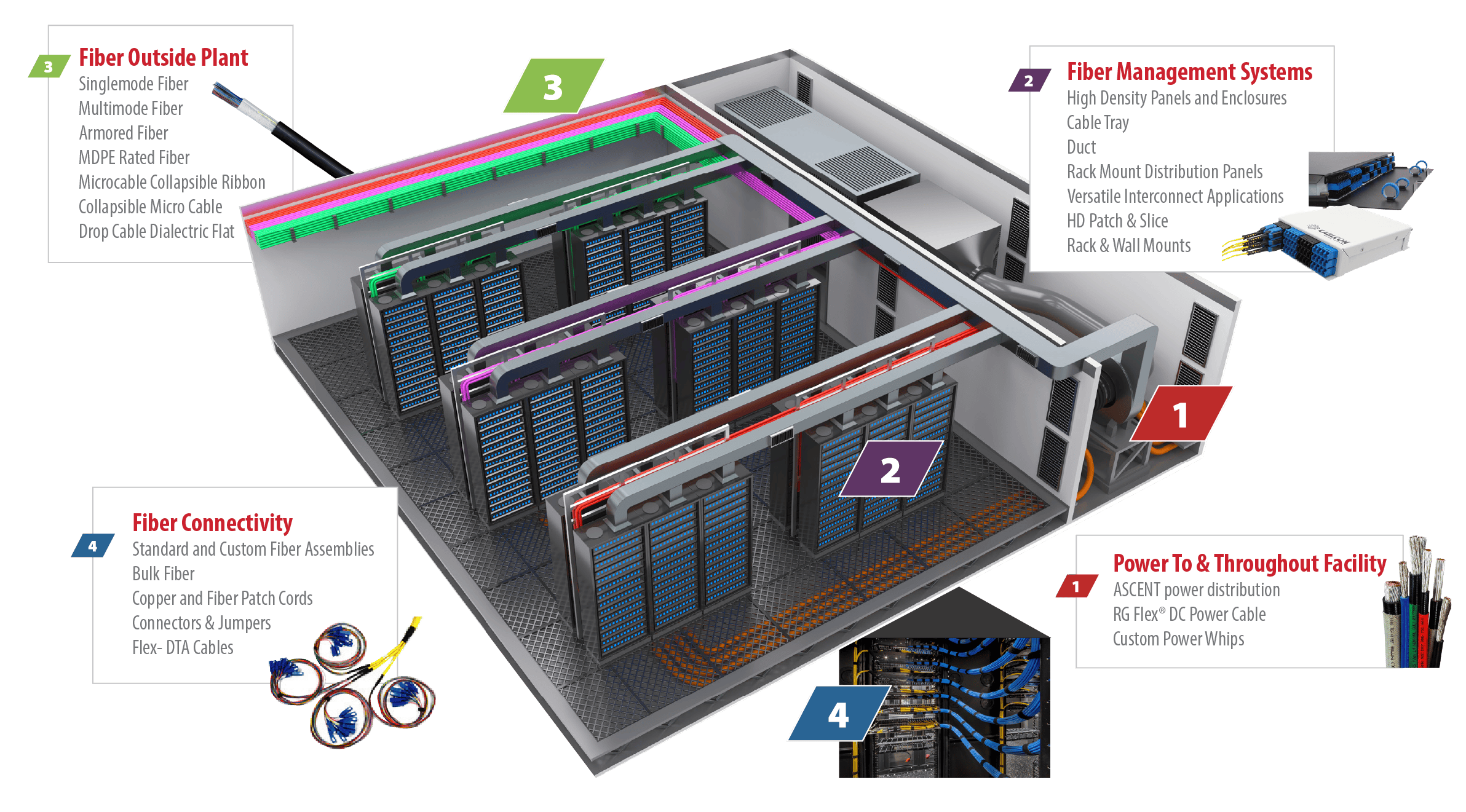
Reliable data center operations depend on a power infrastructure that can deliver electricity consistently from facility-level sources to racks and IT equipment. Along the way, power may move through UPS systems, power distribution units, remote power panels, busway, branch circuits, power whips, and rack-level distribution equipment.
As rack densities increase and data centers support more AI, cloud, and high-performance computing workloads, power distribution systems must also support greater capacity, redundancy, scalability, and installation efficiency.
Understanding how these components work together can help data center teams plan reliable power infrastructure from upstream distribution to the rack.
What Is Data Center Power Distribution?
Data center power distribution is the infrastructure used to deliver electrical power from incoming and backup power sources to servers, networking equipment, storage systems, and other IT loads.
Rather than moving directly from the utility source to the rack, power typically passes through several stages that protect, condition, distribute, and divide the electrical load.
Common components can include:
- Utility and generator sources
- Transformers and switchgear
- Uninterruptible power supply (UPS) systems
- Power distribution units (PDUs)
- Remote power panels (RPPs)
- Busway
- Branch circuits and power whips
- Rack PDUs
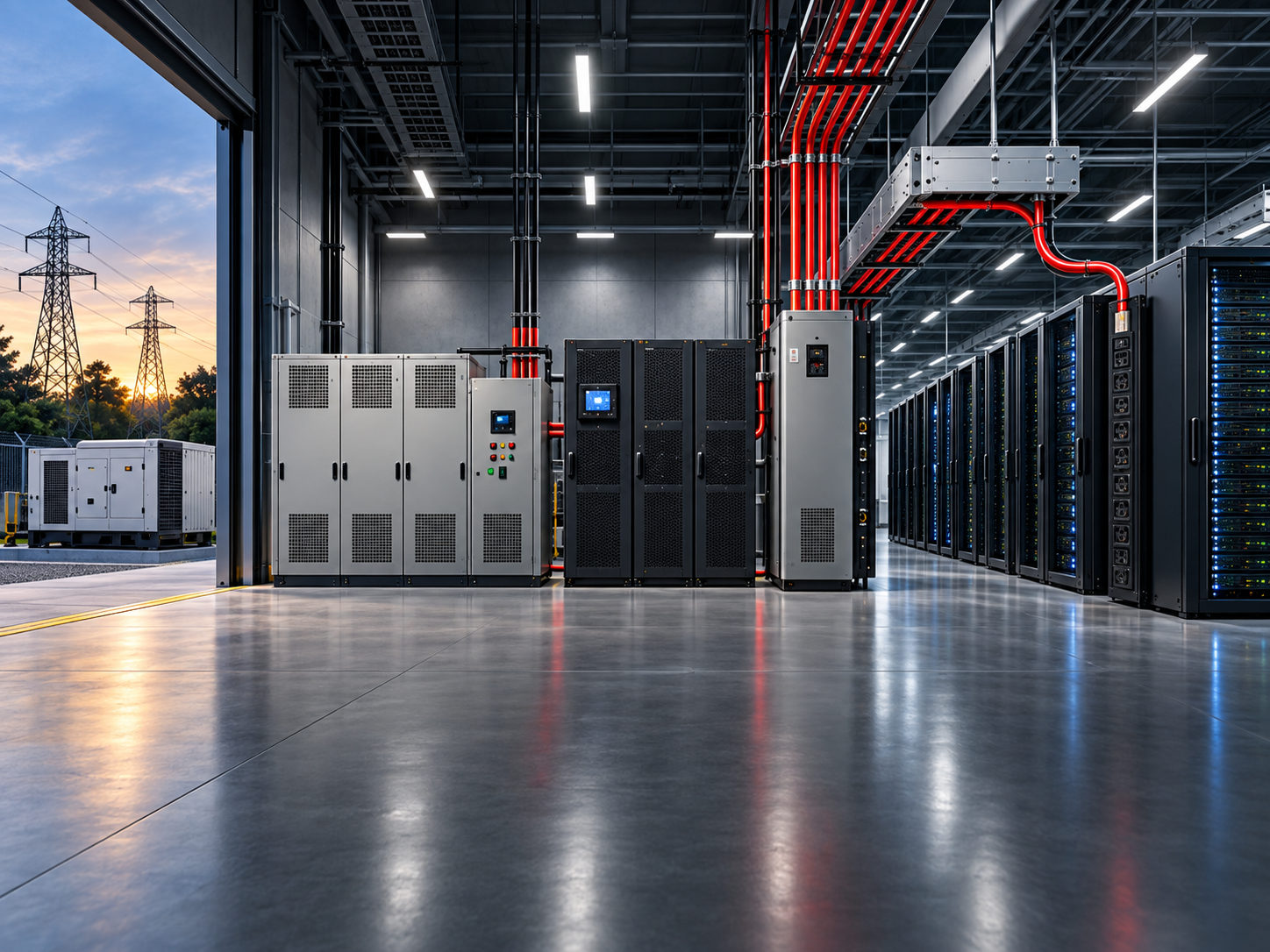
The specific architecture depends on factors including facility size, voltage, rack density, redundancy requirements, electrical load, equipment layout, and future capacity needs.
How Does Power Flow Through a Data Center?
Although data center power architectures vary, a simplified distribution path may look like:
Utility / Generator → Transformer & Switchgear → UPS → PDU / RPP / Busway → Power Whip / Branch Circuit → Rack PDU → IT Equipment
Each part of the chain performs a different function:
- UPS systems help provide temporary backup and conditioned power to critical loads when incoming power is interrupted or unstable.
- Power distribution units (PDUs) distribute electricity to downstream circuits or equipment.
- Remote power panels (RPPs) provide a distribution point closer to the IT equipment, allowing multiple branch circuits to be distributed throughout the data hall.
- Busway systems provide an alternative or complementary method of moving power across rows of equipment using an enclosed distribution system with accessible tap-off locations.
- From these distribution points, branch circuits and power whips can carry power to rack PDUs or other equipment, where electricity is finally distributed to servers and other IT loads.
- Rack PDUs are connected to the distribution points via power whips and provide power to the individual active equipment devices (switches, servers, routers, etc.)
This full path is important when planning cable requirements, connector configurations, routing, redundancy, and future expansion.
Busway vs Cable-Based Power Distribution
Data centers may use busways, cable-based power distribution, or a combination of both.
|
Busway
|
Cable-Based Distribution
|
|---|---|
| Uses an enclosed electrical distribution system | Uses cable, conduit, power whips, and related assemblies |
| Tap-off locations can support changing rack layouts | Assemblies can be configured for specific applications |
| Can support modular expansion | Offers flexible routing and connector configurations |
| Often used across rows of equipment | Can support repeatable rack-level connections |
| More Expensive | Less Expensive |
Neither method is universally better. The appropriate approach depends on rack layout, power density, electrical architecture, installation requirements, maintenance strategy, and expansion plans.
In many data centers, busway and cable assemblies are used together. For example, a busway may distribute power above a row of racks while a power assembly provides the final connection from a tap-off point to rack-level equipment.
Where Do Power Whips/Assemblies Fit in Data Center Power Distribution?
Power whips are preconfigured electrical cable assemblies used to connect power distribution infrastructure with rack-level or equipment-level loads.
Depending on the facility design, a power whip may connect an RPP, PDU, busway tap-off (power assembly) point, or other distribution source to a rack PDU or downstream piece of equipment.
Power whips/assemblies can be configured with components such as:
- Power cable
- Conduit
- Plugs or receptacles
- Connectors
- Terminations
- Labels
Because assemblies can be manufactured to project requirements before reaching the installation site, power whips can help support consistent connections across large deployments and reduce the amount of field assembly required.
Choosing Cable for Data Center Power Distribution
Selecting power cable for a data center application involves more than choosing conductor size. Important considerations can include:
- Voltage and ampacity
- Conductor size
- Temperature rating
- Cable flexibility
- Routing and bend requirements
- Installation environment
- Connector configuration
- Pathway space
- Applicable codes and equipment requirements
- Maintenance and future expansion
Different applications may require different cable constructions. A fixed facility distribution run, DC power application, and flexible rack-level assembly may have very different installation and performance requirements.
Early consideration of cable routing and connection requirements can also help reduce congestion and simplify installation as power infrastructure becomes denser.
Redundancy, High Density Power and Future Growth
Power distribution systems must increasingly support both high availability and rising rack power requirements.
Redundant Power Paths
Many data centers use separate A and B power paths so equipment with redundant power supplies can receive electricity from independent distribution sources.
Redundancy can extend through UPS systems, PDUs, RPPs, busway, branch circuits, power whips, and rack PDUs depending on the facility design.
Clear labeling and consistent assembly configurations can make redundant connections easier to install, identify, maintain, and troubleshoot.
High Density and AI Infrastructure
AI and high-performance computing are increasing the electrical demand of individual racks. Higher power density can place additional requirements on:
- Cable ampacity
- Connector selection
- Rack PDU capacity
- Power whip configurations
- Distribution capacity
- Cable routing and pathway space
- Cooling coordination
Delivering more power within the same physical footprint makes early coordination between electrical distribution, rack design, cabling, and cooling increasingly important.
Planning for Expansion
Power infrastructure should also account for future requirements such as additional racks, higher rack densities, new workloads, and changes to equipment layouts.
Standardized cable and assembly configurations can make it easier to repeat successful designs across racks, data halls, or multiple facilities.
How Preconfigured Power Assemblies Can Support Deployment
Large data center deployments may require hundreds or thousands of similar electrical connections. Building each connection individually in the field can increase installation complexity and introduce unnecessary variation.
Preconfigured assemblies can be manufactured to project specifications before they arrive on site. Depending on the application, an assembly may include cable, connectors, conduit, labels, plugs, receptacles, or other components.
This approach can help support:
- Consistent configurations
- Reduced field assembly
- Faster installation
- Repeatable rack deployments
- Simplified labeling and identification
- Easier expansion using established configurations
The appropriate assembly design depends on the electrical architecture and installation requirements of the project.
Data Center Power Distribution Best Practices
A few principles can help support reliable and scalable distribution infrastructure:
Plan around the full power path. Consider connections from upstream distribution through rack level equipment instead of designing each connection independently.
Account for future power density. Rack requirements may increase considerably over the life of the facility.
Standardize repeated connections. Consistent cable, connector, assembly, and labeling configurators can simplify large installations.
Keep redundant paths clearly identified. A/B systems are most useful when their connections remain easy to distinguish.
Coordinate cable routing with physical infrastructure. Power cabling should be planned alongside pathways, equipment access, and cooling requirements.
Follow applicable requirements. Electrical infrastructure should comply with applicable codes, standards, equipment specifications, and local requirements.
Cablcon Data Center Power Solutions
Data center power distribution depends on the physical infrastructure connecting each stage of the electrical system.
Cablcon supports data center projects with solutions including:
- Custom Power Whips & Assemblies
- High-power and high-density cable solutions
- RG Flex DC Power Cable
- Connector devices
- Conduit solutions
- Grounding and bonding products
- Custom labeling and kitting
- Installation-ready assemblies
- Testing and project-specific configurations
- Engineering and project support
Whether a project requires rack-level power whips, custom cable assemblies, DC power cable, or repeatable configurations across a large deployment, Cablcon can help identify solutions around the project’s electrical and installation requirements.
Related Resources

Data Center Power Whips: What They Are and Why They Matter
Learn how data center power whips support reliable power distribution, faster deployment, and scalable high-density infrastructure.Read Guide
Choosing Data Center Power Cables for High-Density Infrastructure
Explore cable selection considerations for reliable power distribution, rack-level connections, and high-density data center environments.Read Guide
Data Center Wiring Compliance Guide
Review standards, labeling, documentation, and installation considerations for compliant data center wiring infrastructure.Read Guide