Fiber Optic Cable Bend Radius: Installation and Handling Guidelines
What Is Bend Radius in Fiber Optic Cabling?
Bend radius describes the size of a fiber optic cable’s curve: a smaller radius means a tighter bend. Minimum bend radius is the smallest allowable radius specified for that cable.
Bend Radius vs. Bend Diameter
Bend radius and bend diameter are related, but they are not the same measurement. Bend radius measures from the center of a curve to the cable path, while bend diameter measures the full width of the loop. The bend diameter is twice the bend radius.
This distinction matters when reviewing manufacturer specifications, planning slack loops, or selecting routing hardware. Always confirm whether a published value refers to radius or diameter before using it in an installation.

Why Bend Radius Matters
Knowing your cable’s minimum bend radius is important because bending below that limit can increase optical loss and damage the fibers or cable structure. This damage may not be visibly obvious, but it can contribute to performance and reliability problems. Maintaining a bend radius at or above the specified minimum helps protect the cable during installation and use.
Excessive bending can create macrobending or microbending losses. Macrobending occurs when the cable is bent too tightly around a visible curve, while microbending refers to smaller distortions within the fiber that can also increase signal loss. In either case, the cable may continue to look normal from the outside even while optical performance is being affected.
Bend Radius During and After Installation
Fiber optic cables can have different minimum bend-radius limits during pulling under tension and after installation, when pulling tension has been removed. The Fiber Optic Association (FOA) describes typical minimums of 20 times the cable diameter during pulling and 10 times after installation. The difference matters because cable is exposed to additional mechanical stress while it is being pulled. Once the pulling force is removed, the cable may be able to tolerate a tighter bend. This is why installation guidance often distinguishes between a bend radius under tension and a bend radius after installation. These multipliers are not universal; always follow the manufacturer’s specifications for the exact cable being installed.
How to Find Your Cable’s Minimum Bend Radius
To find your cable’s minimum bend radius, start with the manufacturer’s datasheet or installation instructions for the exact cable. When reviewing a datasheet, look for terms such as minimum bend radius, installation bend radius, operating bend radius, or loaded and unloaded bend radius. It can also help to confirm the cable’s outside diameter, since some manufacturers express bend limits as a multiple of cable diameter rather than as a fixed measurement. Check the limits for pulling under tension and after installation and confirm whether the specification gives a bend radius or bend diameter. Cablcon’s 3mm Backbone Assemblies, for example, list bend-radius values ranging from 0.9 to 1.5 inches depending on the configuration. The table below compares these published specifications, showing why it is important to check your specific assembly rather than assume one general rule applies.
| FIBER COUNT | OD | TENSILE | BEND RADIUS | FIBERS/TRAY |
|---|---|---|---|---|
| 8f | 3.0 mm | 100 lbs | SM 0.9"/MM 1.2" | 12,928 |
| 12f | 3.0 mm | 100 lbs | SM 0.9"/MM 1.2" | 19,392 |
| 16f | 3.8 mm | 150 lbs | SM 1.2"/MM 1.5" | 16,640 |
| 24f | 3.0 mm | 150 lbs | SM 1.2"/MM 1.2" | 38,784 |
| 24f | 3.8 mm | 150 lbs | SM 1.2"/MM 1.5" | 24,960 |
Maintaining Bend Radius During Cable Pulling, Routing, and Storage
Maintaining the specified minimum bend radius helps protect the cable during pulling, routing, and storage. Plan bends at corners, conduit exits, cable tray transitions, and other changes in direction before installation begins. Pulling equipment, guides, sheaves, and routing hardware should provide enough space for the cable to bend gradually rather than forcing it around a sharp point.
Storage and slack management matter as well. Excess cable should be coiled in loops large enough to remain above the specified minimum bend radius, and tight ties or fasteners should not force the cable into a smaller curve. Pay particular attention to transition points near cabinets, racks, enclosures, and termination locations, where space constraints can make tight bends more likely.
Common Bend Radius Mistakes and How to Avoid Them
- Confusing bend radius with bend diameter: Check which measurement the specification uses; diameter is twice the radius.
- Pulling around sharp transitions or using undersized equipment: Plan gradual changes in direction and select equipment that accommodates the cable’s specified minimum radius.
- Storing excess cable in overly tight loops: Leave enough space to keep storage loops at or above the specified minimum bend radius.
- Using another cable’s limits or the wrong installation condition: Check the exact cable’s specifications and use the limit that applies during pulling or after installation.
- Assuming one bend-radius rule applies to every fiber cable: General rules of thumb can be helpful, but manufacturer specifications should take priority for the exact cable or assembly.
- Ignoring tight bends near enclosures or terminations: A cable may be routed correctly through most of the run but still be forced into a tight bend where it enters a cabinet, rack, or termination point.
Choosing the Right Fiber Optic Assembly
Always check the bend-radius specifications for the exact cable you’re installing. Limits can vary between cables, so applying another cable’s requirements may lead to damage or performance problems. Need help selecting a fiber optic assembly for your project? Contact Cablcon to discuss your application.

Backbone Cabling: The Foundation of Modern Networks
Learn how backbone cabling supports reliable network infrastructure, including fiber routing, pathways, terminations, and bend-radius considerations.Read the Guide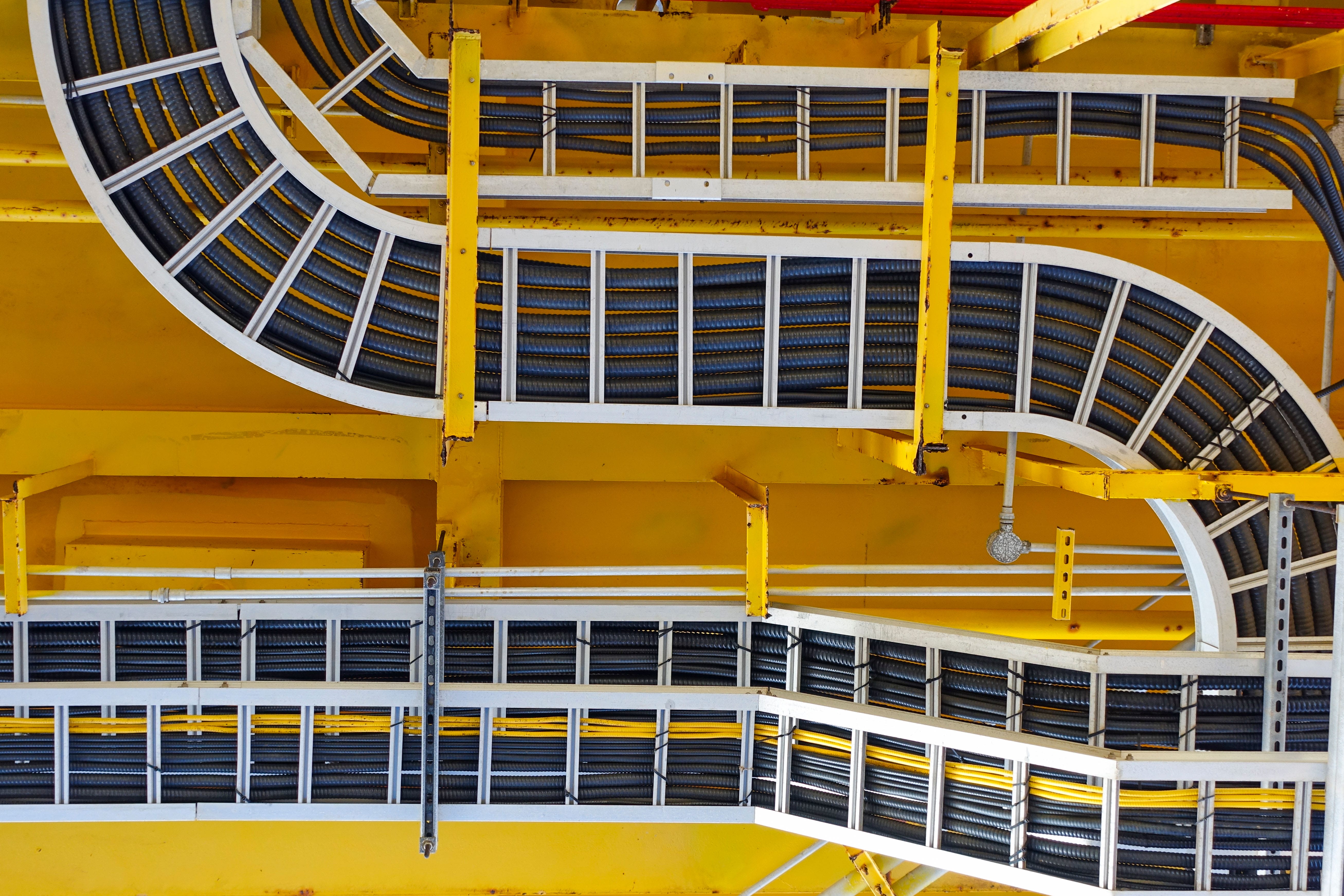
Importance of Cable Trays
Explore how cable trays support organized fiber routing, reduce physical stress, and help maintain proper bend radius across network infrastructure.Learn More
Benefits of Fiber Optic Infrastructure
Discover the performance, reliability, scalability, and bandwidth advantages that make fiber a foundation of modern network infrastructure.Explore the Benefits